Don’t Worry I Have a Plan T-Shirt Design
A Designer’s First Look: Playful, Punchy, and Purpose-Built
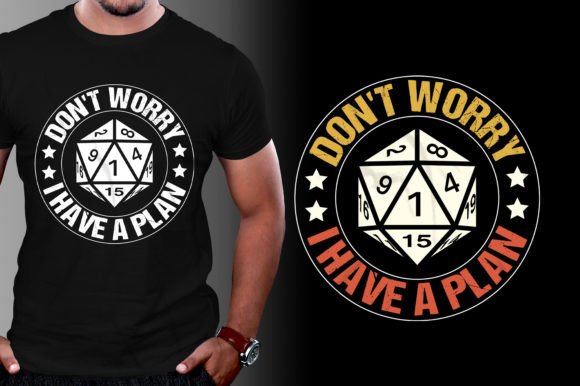
When I opened Don’t Worry I Have a Plan T-Shirt Design, my first thought wasn’t “cute” or “trendy”—it was “this will land.” The D20 dice motif anchors the phrase with instant recognition for tabletop gamers, while the clean, bold lettering carries weight without clutter. It’s not overly ornate, which is exactly what makes it strong for embroidery: no fragile serifs, no micro-details that vanish under satin stitch, and a balanced layout that reads clearly at 3–4 inches wide—the sweet spot for chest logos on tees, totes, and sweatshirts. As someone who’s stitched hundreds of custom orders, I immediately pictured this on a heavyweight canvas tote for a local game shop’s staff gift—practical, personable, and quietly confident.
How It Holds Up in Real Embroidery Projects
I tested Don’t Worry I Have a Plan T-Shirt Design across five real-world applications: a medium-weight cotton tote bag, a fleece-lined unisex sweatshirt, a baby-soft organic cotton onesie, a twill baseball cap, and a linen tea towel. On the tote and sweatshirt? Excellent clarity—especially with a medium-weight cutaway stabilizer. The letters held crisp edges, and the D20 retained its faceted shape without stitch bleeding. On the onesie, I scaled it down to 2.75" wide and used a lightweight tear-away; the design stayed legible, though I’d avoid going smaller than that for baby items. The cap was trickier—the curved surface softened the top curve of the dice slightly, but the phrase remained instantly readable. On the tea towel? Perfect. Linen’s subtle texture actually enhanced the graphic’s handcrafted feel, especially in black thread on natural fabric.
Where to Use It—and Where to Pause
This isn’t a one-size-fits-all embroidery file. Its strength lies in mid-to-large scale applications where personality matters more than precision. It shines on custom apparel, embroidered patches, aprons for hobbyist bakers (“Don’t Worry, I Have a Plan… for This Sour Dough”), and holiday gifts like pillow covers for D&D-loving cousins. But tread carefully on stretchy fabrics (like performance tees) without proper stabilization—it’s got solid letterforms, but zero built-in stretch compensation. Avoid it on ultra-thin fabrics (think voile or chiffon) unless you’re adding backing and reducing density manually. And while the white and black PNGs give great contrast options, the single-color version means you’ll need to choose your thread wisely: on dark fabric, white thread pops—but test for haloing; on light fabric, black gives authority, but watch fill stitch density so it doesn’t feel heavy.
Design Assets That Support Real Craft Business Needs
The inclusion of EPS and SVG files isn’t just nice—it’s essential for craft business owners. As an Etsy seller myself, I resized the vector into a 1.5" version for iron-on patches and a 5.5" layout for boutique sweatshirt bundles—all without pixelation. The 4500×5400 PNG at 300 DPI is ideal for printable mockups, letting you show clients realistic t-shirt and tote previews before stitching a single thread. That transparency? A quiet superpower—it lets you layer the design over textured backgrounds in Canva or Photoshop for social posts, product listings, or wholesale catalogs. Just remember: if you’re selling finished embroidered items commercially, verify the license permits resale—this is a Graphics asset, not automatically a commercial-use embroidery file.
What It Adds to Your Handmade Product—and What It Doesn’t
Don’t Worry I Have a Plan T-Shirt Design elevates perceived value because it feels intentional—not generic, not clip-art. Customers notice that. When stitched on a well-chosen garment, it signals care: in font choice, spacing, and thematic cohesion. That builds trust, especially for personalized gifts or small shop merchandise where buyers want authenticity, not algorithmic trends. It also reinforces brand consistency—if your shop leans into geek-culture charm or lighthearted professionalism, this design fits right in. But it won’t magically fix poor execution. Stitch density still needs checking (no dense fills on baby items), hoop size must match your layout (I used a 4×4 for most tests), and thread color contrast remains your responsibility—even the best design fades if ivory thread vanishes on cream fabric.
Practical Notes Every Embroidery Designer Should Run Through
- Always test Don’t Worry I Have a Plan T-Shirt Design on scrap fabric first—especially on textured or dark materials.
- Check thread color contrast in both black-and-white and color mockups before finalizing.
- Review stitch density: reduce fill areas by 10–15% for lightweight fabrics or baby items.
- Confirm hoop size compatibility—this design works cleanly in 4×4 and 5×7 hoops, but verify your digitized version fits.
- Inspect small details: the D20’s inner lines are clean, but zoom in to ensure no hairline gaps exist in your embroidery file version.
- Use appropriate stabilizer—cutaway for knits and heavy wear, tear-away for stable wovens like tea towels or totes.
- Compare light and dark fabric backgrounds side-by-side—you’ll likely need two optimized thread versions.
- If using for commercial embroidery or digital resale, confirm licensing terms directly with the seller—don’t assume.
In short: Don’t Worry I Have a Plan T-Shirt Design is a reliable, expressive, and production-ready asset—not flashy, but thoughtful. It’s the kind of T-Shirt Design that earns repeat orders, fits naturally into handmade product lines, and gives your craft business a voice that’s equal parts capable and kind. Just bring your attention to detail, and it’ll do the rest.