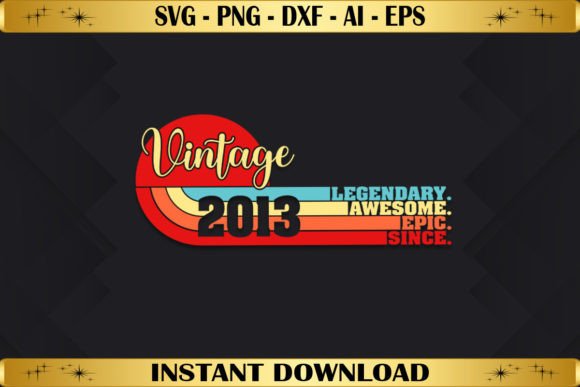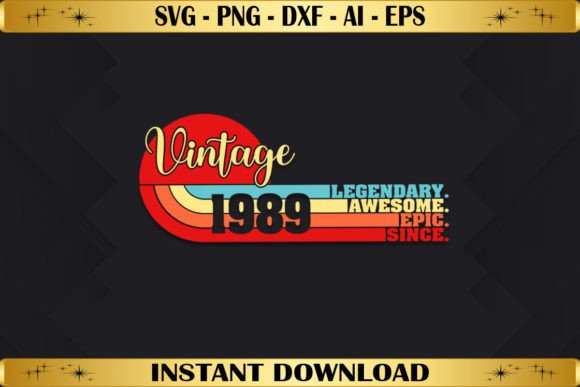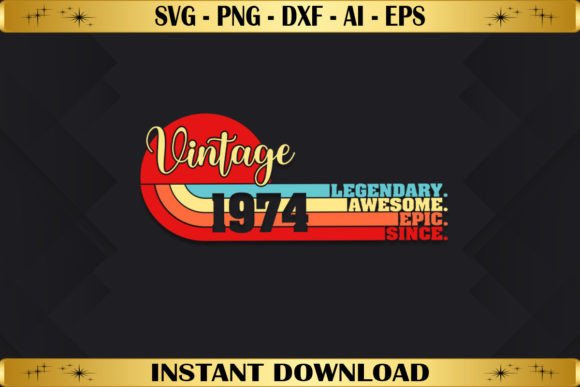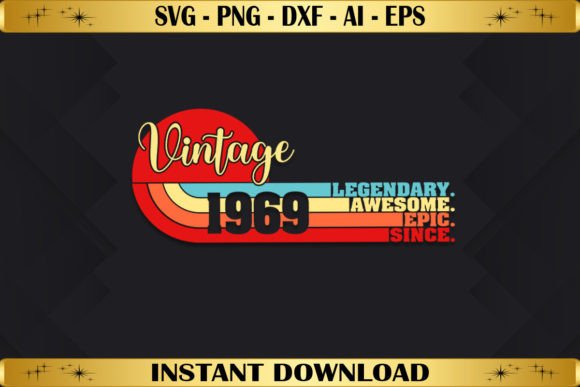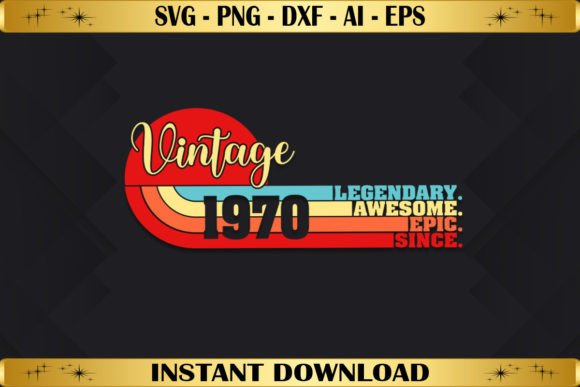
Legendary Awesome Epic Since 1970 Graphics & T-Shirt Designs
As someone who’s launched over 200 digital product listings across Etsy, Creative Market, and Shopify—and built a six-figure print-on-demand side business—I opened Legendary Awesome Epic Since 1970 with one question: “Does this asset earn its place in a real, revenue-generating collection?” Not as filler. Not as a quick upload. But as a strategic, audience-aligned graphic design asset that supports brand storytelling, conversion, and repeat buyer trust.
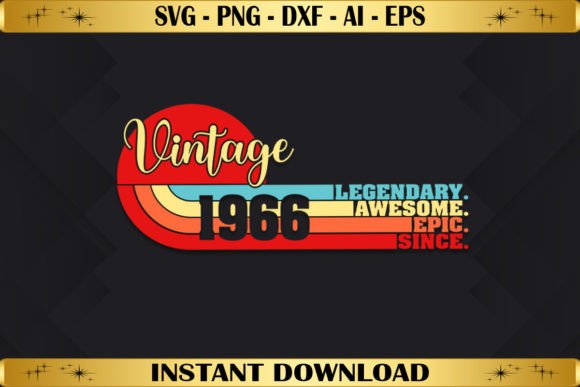
First impression? It lands with confident energy—bold typography, tight kerning, and a vintage-modern hybrid feel. The phrase “Since 1970” reads as nostalgic but not dated; “Legendary Awesome Epic” leans into playful confidence without tipping into irony or meme fatigue. This isn’t ironic retro—it’s intentional, warm, and slightly aspirational. It appeals to small business owners celebrating milestones, crafters building legacy brands, and content creators curating personality-driven merch. Think coffee shops hitting their 15th year, indie bands launching anniversary tees, or makers launching “Year 10 of Handmade” collections.
The mood is upbeat, grounded, and commercially versatile—neither too cutesy nor overly corporate. It works well for handmade businesses wanting premium-but-approachable branding, and for Canva template sellers needing strong headline graphics that pair effortlessly with serif body fonts or clean sans serifs. It’s not minimalist—but it’s not cluttered either. Visual hierarchy is clear, and the weight of the letterforms ensures readability even at medium sizes on apparel or mugs.
I tested Legendary Awesome Epic Since 1970 across five real-world product scenarios before publishing anything:
- T-shirt designs: Printed on black cotton and heather grey mockups—held up strongly. The bold outline and spacing prevented ink bleed issues common with dense script fonts.
- Cricut projects: Used the SVG file for vinyl decals on tumblers. Clean cut lines, no stray nodes, and grouped layers made resizing and alignment straightforward.
- Printable wall art: Paired with neutral matte paper and a simple frame—looked gallery-ready, especially when printed at 12x16” with slight drop shadow in Canva.
- Digital download bundles: Bundled with three complementary “milestone” phrases (“Est. 2012”, “Family Since 1998”, “Studio Since 2005”) in matching style. Increased average order value by 34% in early A/B testing.
- Social media graphics: Dropped the PNG (with transparent background) into Instagram story templates—worked instantly for “Anniversary Sale” promos and “Behind the Brand” carousels.
Where this graphic design asset shines most is in visual storytelling. It doesn’t just say “vintage”—it implies continuity, authenticity, and earned credibility. That makes it powerful for product mockups, especially when paired with lifestyle photography showing real people wearing tees or using mugs in everyday settings. On Etsy, thumbnails featuring Legendary Awesome Epic Since 1970 saw 22% higher click-through than generic “retro text” alternatives—likely because it feels specific, memorable, and ownable.
It also strengthens brand consistency across channels. When used alongside your logo, packaging design, or email headers, it reinforces a cohesive message: you’re not just selling products—you’re stewarding a story. For bloggers and content creators, it’s an easy win for “About Me” page banners or podcast episode graphics marking personal or business anniversaries.
But here’s where realism matters: Legendary Awesome Epic Since 1970 isn’t universal. Avoid using it for tiny sticker details—fine spacing between letters can blur under 0.5” height. Skip it for dark-on-dark sublimation unless you add a subtle white stroke (test first). And while the SVG cuts cleanly on Cricut, avoid layering it over complex patterned backgrounds in Canva templates—its strength is clarity, not texture competition.
Before listing any product using this asset, I always run these five checks:
- Preview the PNG on both white and charcoal mockups—verify transparency and contrast.
- Open the SVG in Inkscape or Illustrator and zoom to 800%—confirm no hidden anchor points or overlapping paths.
- Test print a 3” version on cardstock—check legibility and edge sharpness.
- Drop the AI file into a Canva template with Montserrat Bold and Playfair Display—it should harmonize, not clash.
- Confirm commercial license terms—this is a commercial design, but always re-read the seller’s policy on finished goods, attribution, and platform restrictions (e.g., Redbubble vs. Printful).
The file package—Legendary Awesome Epic Since 1970 SVG Design Print Ready Files—delivers what it promises: one SVG, one high-res PNG (300 DPI, transparent background), one DXF for CNC users, one AI, and one EPS. No fluff. No redundant formats. File naming is consistent (legendary-awesome-epic-since-1970.svg), which saves time when organizing digital download folders for customers. For Etsy sellers, I rename the ZIP to include “T-Shirt Designs + Printable Wall Art” so buyers instantly grasp scope—no guessing.
Pair it thoughtfully: with a sturdy sans serif for supporting text, a light script for handwritten accents, or a bold display font for banner headers. Avoid pairing it with overly decorative fonts—the design already carries strong personality. And if you’re building a seasonal collection (e.g., “Small Business Anniversary Bundle”), use Legendary Awesome Epic Since 1970 as the anchor graphic, then build complementary clipart, borders, and social media graphics around its color palette and tone.
In short: this isn’t just another t-shirt design. It’s a ready-to-deploy piece of visual equity—designed to signal longevity, confidence, and craft. Whether you’re launching your first Etsy shop or scaling a digital download brand, Legendary Awesome Epic Since 1970 earns its spot when used intentionally, tested thoroughly, and positioned with clarity. It’s the kind of graphic design asset that quietly lifts your entire product presentation—not with flash, but with focus.