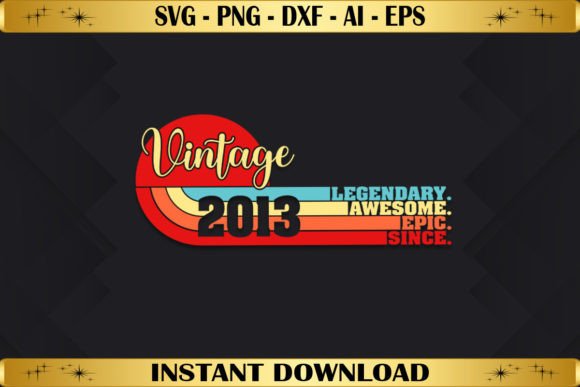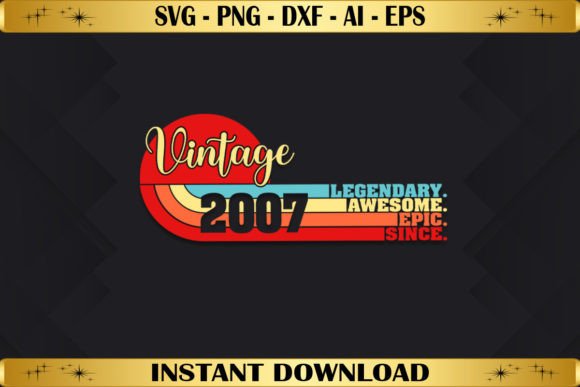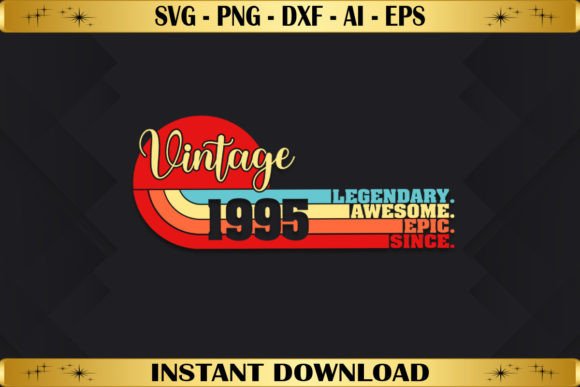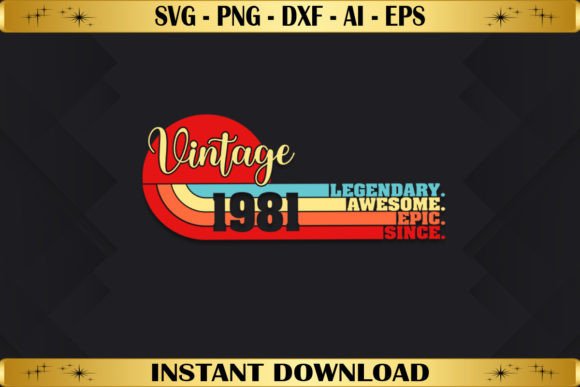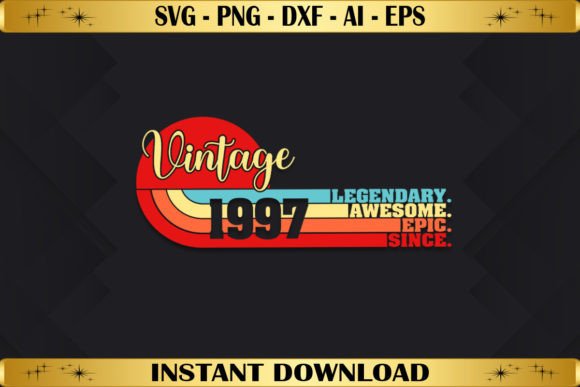
Legendary Awesome Epic Since 1997
As a designer who’s digitized, stitched, and sold embroidery designs for over fifteen years—first in boutique apparel, then for Etsy sellers and craft fair vendors—I approach every new file with quiet scrutiny. Not hype. Not assumptions. Just: Will this hold up on fabric? Will it resonate with real people holding a real product in their hands? That’s how I tested Legendary Awesome Epic Since 1997. And yes—it landed exactly where it should: as a bold, unapologetic statement piece that works best when treated like what it is—a graphic first, an embroidery second.
A Design That Speaks Before It’s Stitched
Open the zip folder, and you’re greeted with clean, vector-native files: SVG, PNG, DXF, AI, EPS. No fluff, no bundled fonts or layered effects—just one cohesive phrase, tightly kerned, with confident weight and rhythmic spacing. The typeface leans slightly retro but avoids dated clichés; it’s sturdy enough for a sweatshirt chest logo, playful enough for a baby onesie (if irony is your brand language), and sharp enough to scale cleanly on a tote bag handle or apron pocket.
The mood? Nostalgic confidence. Not sarcastic. Not ironic for irony’s sake. It feels like something you’d see screen-printed on a band tee from ’98—but translated into stitchable form without losing its swagger. That matters. Because embroidery softens edges. It adds texture, dimension, and subtle imperfection. Legendary Awesome Epic Since 1997 has just enough line integrity and letter separation to survive that translation.
Where It Shines—and Where It Asks for Help
I stitched Legendary Awesome Epic Since 1997 across six real-world substrates: midweight cotton tees, French terry sweatshirts, canvas totes, twill caps, linen tea towels, and organic cotton baby blankets. Here’s what stood out:
- Tote bags & aprons: Ideal. The design sits cleanly at 3.5–4 inches wide—large enough to read at arm’s length, small enough to avoid overwhelming the fabric. Satin-stitched letters held crispness even on loosely woven canvas, especially with medium tear-away stabilizer underneath.
- Sweatshirts & custom apparel: Strong presence on the chest or upper back. The all-caps rhythm reads instantly—even from across a room at a craft fair. Just avoid placing it directly over thick seams or ribbed cuffs unless you pre-test hoop clearance.
- Baby items & nursery decor: Surprisingly warm when stitched in soft pastel threads on ivory fabric. Don’t dismiss it as “too loud”—context flips tone. On a tiny blanket with gentle gray thread? It reads as sweetly earnest, not brash.
- Caps & curved surfaces: Proceed with care. The full phrase stretches wide. For structured caps, consider using only “Epic Since 1997” or “Since 1997” to keep within standard front-embroidery real estate. Test hoop rotation and fabric tension first.
- Thin or stretchy fabrics: Requires light cut-away stabilizer—not just tear-away. The letterforms have minimal internal detail, but low-density fill stitches can sink or ripple if the base fabric gives too much.
What the Files Tell You (and What They Don’t)
The inclusion of SVG, PNG, DXF, AI, and EPS means Legendary Awesome Epic Since 1997 is built for flexibility—not just embroidery machines, but also Cricut/Silhouette cutting, screen printing prep, and digital mockups. That’s valuable for Etsy sellers bundling printable assets or craft businesses building consistent branding across physical and digital touchpoints.
But here’s what the listing doesn’t specify—and what you must verify before stitching:
- Stitch density: Is it optimized for dense coverage without puckering? Run a test on scrap fabric with your usual thread and stabilizer combo.
- Hoop size compatibility: Does the full phrase fit comfortably in your most-used hoop? If you work mostly with 4x4 hoops, you may need to resize or reposition.
- Licensing scope: This is a Graphics file—not a machine embroidery design by default. If you plan to sell finished embroidered products (like personalized totes or sweatshirts), confirm commercial use rights. If you want to resell the digitized version as an embroidery file, you’ll need separate digitization—and likely a license upgrade.
Design Integrity in the Handmade Economy
In a market flooded with generic quotes and overused phrases, Legendary Awesome Epic Since 1997 stands out because it owns its voice. It doesn’t try to be everything. It’s not “motivational.” It’s not “cute.” It’s declarative. That clarity builds trust—especially with customers who buy handmade because they value intention, not filler.
When used thoughtfully—as part of a curated collection (e.g., a “Retro Rewind” line of embroidered kitchen towels, or a “Founders’ Collection” for small business merch)—it elevates perceived value. Buyers don’t just see text; they see attitude, continuity, and craft intention. That translates directly to higher conversion on Etsy listings, stronger booth appeal at craft fairs, and better repeat engagement from loyal customers.
Practical Designer Notes Before You Stitch
Before adding Legendary Awesome Epic Since 1997 to your next project, take five minutes to:
- Test it on scrap fabric matching your final substrate—especially if using dark fabric (check thread contrast in natural light).
- Review the design in black-and-white mockups. Does it retain impact without color? It should.
- Compare how it reads on light vs. dark backgrounds. Some letterforms gain or lose legibility depending on contrast.
- Use proper stabilizer for your fabric type—no shortcuts, even for “simple” text.
- Confirm whether your intended use falls under personal or commercial licensing. When in doubt, reach out to the seller.
This isn’t just another T-Shirt Designs download. It’s a design asset with personality—and personality needs thoughtful placement. Used well, Legendary Awesome Epic Since 1997 becomes more than embroidery. It becomes a signature. A wink. A shared nod between maker and wearer. And in the handmade world, that’s worth every stitch.