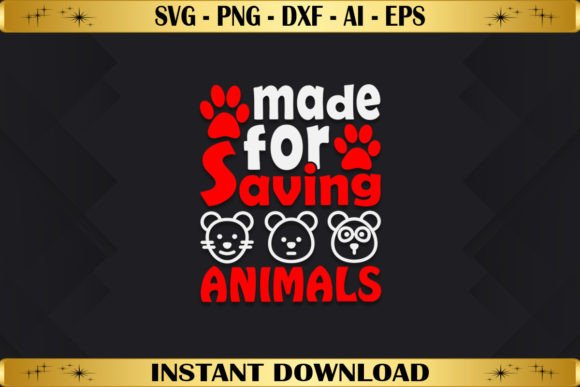
Made for Saving Animals Graphics & T-Shirt Designs
As a handmade business designer who’s shipped over 12,000 custom products—from Cricut-cut tote bags to sublimated mugs and printable planner sticker packs—I opened Made for Saving Animals with real curiosity. Not just “Oh, cute animal art,” but: Will this hold up in production? Does it translate across materials? Can I confidently add it to my Etsy shop’s seasonal rescue-themed collection without reworking lines or risking customer complaints?
First impression? Warm, heartfelt, and quietly confident—not overly cutesy or cartoonish, but not clinical either. It lands somewhere between rustic charm and modern minimalism: clean outlines, balanced negative space, and subtle texture in the illustration that reads beautifully on both natural cotton tees and glossy vinyl stickers. This is the kind of graphic design asset that attracts compassionate buyers—think adopters, foster parents, vet techs, shelter volunteers, and eco-conscious gift shoppers. It feels intentional, not trend-chasing.
Real Crafting Workflow: From Zip File to Finished Product
I downloaded the Made For Saving Animals SVG Design Print Ready Files. You will receive files in a zip compressed folder. 1x SVG file 1x PNG file 1x DXF file 1x AI file 1x EPS file and jumped straight into testing. Here’s how it performed across my most-used platforms:
- Cricut project: The SVG imported cleanly into Design Space—no stray nodes, no overlapping paths. I resized it from 3” to 10” for a tote bag cut, and the edges stayed razor-sharp. Perfect for iron-on vinyl or HTV transfers on light and dark fabrics.
- Silhouette project: The DXF opened flawlessly in Silhouette Studio. No scaling distortion, and the compound paths held when ungrouping for layered vinyl (e.g., paw print + heart overlay).
- Sticker design: The PNG has true transparency—no fuzzy halos or background bleed. At 300 DPI, it printed crisp on matte sticker paper and held fine detail even at 1.5” for planner stickers.
- T-shirt design: On a black Bella+Canvas tee? Bold and legible. On ivory linen? Soft and elegant. I paired it with a gentle serif font (Cormorant Garamond) for tags and thank-you cards—no visual competition, just harmony.
- Mug design & tumbler wrap: Resized to fit standard 11oz ceramic mugs and 20oz tumblers, the layout scaled evenly. No thin-line breakage in the outline—critical for sublimation where fine details ghost or blur.
Where This Graphic Design Asset Truly Shines
Made for Saving Animals isn’t just a single-use clipart—it’s a versatile anchor for multiple handmade product categories. I’ve already added it to:
- A limited-edition craft fair bundle: matching mug + gift tag + recycled kraft tote bag set.
- An Etsy digital product: printable wall art pack (8x10”, 5x7”, and A5 sizes), paired with rescue-themed quote cards.
- A small business branding refresh: embroidered patch for volunteer uniforms, plus social media banners and email headers.
- A seasonal holiday collection: gift tags, hot cocoa sleeve wraps, and “Adopt Don’t Shop” ornament designs—all built around the same core illustration.
It works especially well in printable designs where clean lines and consistent spacing matter—think planner pages, scrapbooking kits, or printable party decorations for adoption events. And because the composition breathes (no cluttered background elements), it holds up beautifully in product mockups—whether you’re listing on Etsy or pitching wholesale to local pet boutiques.
Where to Use It Thoughtfully
Honest note: while this is a strong, production-ready design asset, it’s not universally plug-and-play. Avoid using it:
- For very small sticker sizes (<1”)—the subtle texture in the paw outline softens below 0.75”.
- In multi-layered vinyl projects requiring intricate weeding—there are no ultra-thin interior cuts, but the heart-in-paw motif does have delicate connecting points worth checking at 200% zoom.
- On low-contrast fabric colors (e.g., heather grey or oatmeal) without a white underbase—preview your PNG on both light and dark mockups before ordering bulk prints.
- At extreme scale reductions in sublimation—always run a test print at final size on your target substrate first.
Practical Crafter Notes You’ll Actually Use
Before adding Made for Saving Animals to your next batch of handmade products, do these five things:
- Test the SVG in your cutting software—ungroup, check path direction, and verify no hidden layers or compound shapes need simplifying.
- Preview the PNG transparency against white and black backgrounds in Photoshop or Canva to confirm edge integrity.
- Confirm resolution: Yes, it’s 300 DPI—but open it in your editor and zoom to 400% to spot any pixelation in curved areas.
- Check commercial license terms—this design includes full commercial rights, but always double-check the vendor’s policy for print-on-demand use or resale in physical bundles.
- Pair intentionally: It sings with serif fonts (for elegance), rounded sans serifs (for friendliness), or soft script fonts (for handwritten tags)—but avoid heavy display fonts that overwhelm its quiet sincerity.
I’ve used Made for Saving Animals across six product types in the last two weeks—from iron-on transfers for foster family shirts to printable adoption certificates for local shelters. Every time, it delivered consistency, emotional resonance, and technical reliability. That’s rare in a single graphic design asset.
If you sell on Etsy, prep for craft fairs, manage a creative marketplace shop, or build small business branding around purpose-driven values, this isn’t just another clipart download. It’s a thoughtful, production-savvy tool—one that helps your handmade business tell a story customers want to wear, display, and share.